
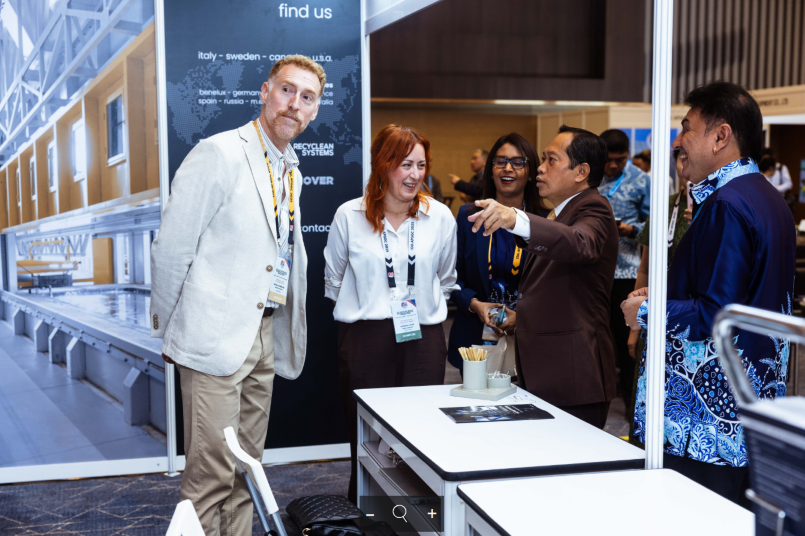
From June 23 to 26, GIMECO attended APGGC 2025 by APGGA – Asia-Pacific General Galvanizing Association in Kuala Lumpur, Malaysia—a leading conference for the galvanizing industry in the Asia-Pacific region and worldwide partners.
This year’s event was a remarkable success and it had also the pleasure to welcome Datuk Seri Ahmad Maslan, the Deputy Minister of Public Works of Malaysia, whom our delegation had the honor to meet.
The APGGC 2025 conference was a fantastic platform to share GIMECO’s commitment to a greener future. Through our speech, solutions, and case studies, we highlighted how we’re actively driving sustainability in the hot-dip galvanizing industry.
The hot-dip galvanizing industry is transforming from outdated, energy-intensive practices to embrace efficiency and sustainability. Historically, plants consumed over 500 kWh per ton of steel, relying heavily on fossil fuels. Today, modern facilities are making strides. Energy recovery systems now capture heat from flue gases, and the shift to natural gas offers a cleaner alternative.
The path to a sustainable future involves a multi-pronged approach integrating clean energy sources and advanced technologies.
Optimized gas & hybrid systems, for instance, utilize high-velocity burners that reduce gas consumption by 15%.
Hybrid gas-electric systems offer flexibility, combining gas operation with electric heating, and integrate with renewables.
Combo full power gas-electric systems provide ultimate control, balancing energy from the grid or on-site renewables allowing over 40% gas savings.
Furthermore, hydrogen solutions represent the most promising long-term approach, with hydrogen combustion producing zero carbon-dioxide emissions.
For immediate impact, full electric systems offer the highest efficiency and zero emissions, potentially reducing energy overall consumption by 35-40% and extending kettle lifespan. These systems easily integrate with heat recovery and on-site renewable energy.
Hence, a greener scenario is possible: while past fossil fuel consumption was over 500 kWh/ton of steel, and today’s gas consumption is over 300 kWh/ton, tomorrow’s advanced solutions project significant reductions: hybrid heating at less than 250 kWh/ton and electric heating at less than 180 kWh/ton.
The impact of these advancements finally also meets carbon pricing mechanisms and national emission bans that are strong crucial drivers for decarbonization. Even with volatile markets and rising energy costs, long-term stability hinges on energy efficiency, fuel flexibility, and renewable energy integration.
GIMECO is proud to lead the evolution of hot-dip galvanizing, creating solutions that boost productivity while significantly cutting its global environmental impact.
What sustainability initiatives are you most excited about?